Luck be a Landlord
Advertisement
Games Overview
A comprehensive overview of Luck be a Landlord exploring its gameplay mechanics, symbol synergies, and why this roguelike slot-builder stands out in the indie gaming scene.
- Paid For Free
Table of Contents
The Strategic Brilliance Behind Luck be a Landlord: A Full Gameplay and Design Breakdown
Indie games often succeed not because of massive budgets or cinematic visuals, but because they dare to experiment with mechanics mainstream studios overlook. One standout example is Luck be a Landlord, created by TrampolineTales. On the surface, it looks like a quirky slot machine simulator. Underneath, it’s a deeply strategic roguelike system disguised as a casual game. What seems like a simple spin-and-win loop quickly evolves into a layered challenge involving probability control, synergy building, and long-term planning.
This article explores the game from every angle: its design philosophy, gameplay systems, strategy depth, replayability, progression structure, and why it has quietly become one of the most compelling indie strategy experiences available today.
A Unique Premise That Instantly Hooks Players
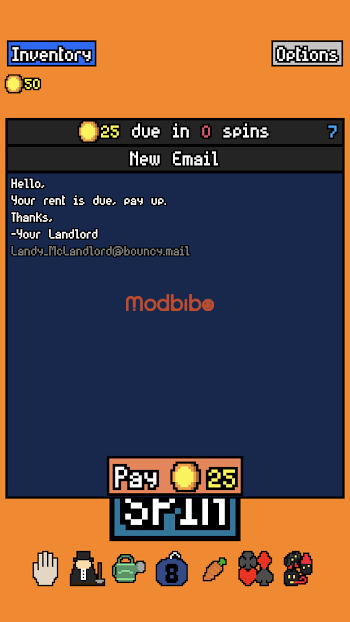
Most games revolve around adventure, combat, or storytelling. This one revolves around rent. Instead of battling enemies or saving the world, your objective is simple: pay your landlord on time. The twist? Your only source of income is a slot machine.
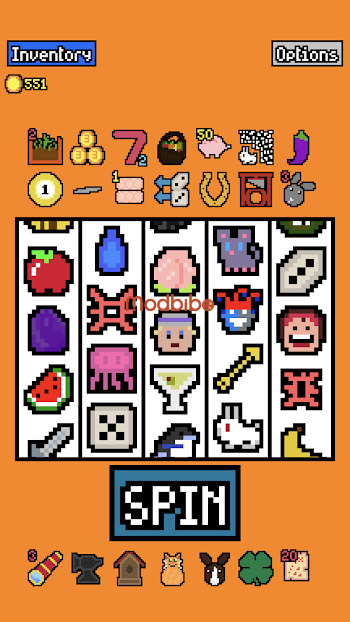
Each spin produces symbols. Those symbols generate coins based on rules, combinations, or interactions. Earn enough before rent is due, and you survive. Fail, and the run ends.
This mundane premise is exactly what makes the game fascinating. By transforming a real-world financial pressure into a strategic system, the game creates tension without needing villains or combat.
The Core Gameplay Loop Explained
The entire experience revolves around a repeating cycle that feels straightforward yet endlessly engaging:
-
Spin the reels.
-
Collect coins from symbol outcomes.
-
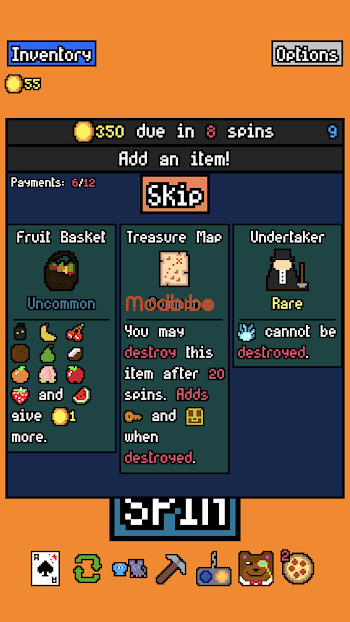
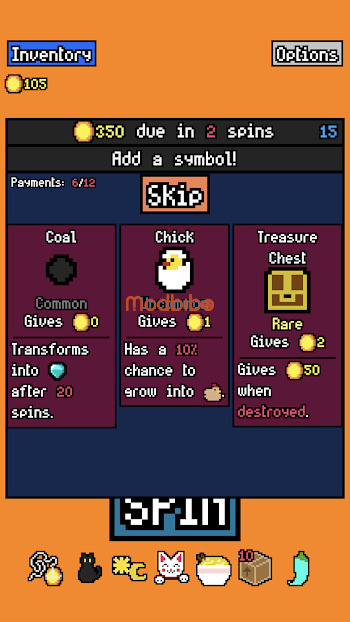
Choose new symbols or items.
-
Prepare for the next rent payment.
This loop works because every decision shapes future probabilities. Accepting a symbol means it becomes part of your permanent pool. The more symbols you collect, the more diluted your chances become unless you carefully curate your set. That single mechanic turns what appears random into something you can gradually control.
Symbols: The Real Game Engine
Symbols are not just decorative icons — they are the entire strategic foundation. Each one has specific properties, such as:
-
Base coin value
-
Conditional bonuses
-
Interactions with neighboring symbols
-
Growth mechanics
-
Destruction effects
Some symbols are consistent earners. Others start weak but scale over time. Some depend on synergy partners, while others consume nearby symbols for profit.
Advertisement
Because each symbol behaves differently, choosing one is never trivial. A symbol that looks useless early might become the centerpiece of a powerful build later. Conversely, a high-value symbol can sabotage your strategy if it doesn’t fit your synergy plan.
Probability Manipulation: Turning Luck Into Strategy
Despite the title, skilled players quickly realize success depends less on luck and more on probability engineering. Every symbol added changes statistical outcomes.
Experienced players learn to:
-
Remove weak symbols to improve consistency
-
Prioritize scalable ones for long runs
-
Balance short-term gains vs long-term growth
-
Build synergy chains
This transforms gameplay into a probability puzzle. Instead of reacting to spins, you’re designing a system where favorable spins become more likely.
Items That Redefine Each Run
Between spins, the game offers items that permanently alter mechanics. These items are not simple stat boosts — they fundamentally reshape how your build functions.
Examples of item effects include:
-
Increasing payouts for specific symbol categories
-
Adding bonus symbols
-
Changing destruction rules
-
Modifying rarity rates
-
Multiplying synergy effects
Because you can only choose one item at a time, each selection becomes a strategic commitment. Items effectively determine your build direction, forcing you to think several turns ahead.
Scaling Difficulty and Rising Pressure
The rent system ensures tension never fades. Early payments are manageable, giving players time to experiment. Later payments become demanding, requiring efficient builds and optimized symbol pools.
Difficulty increases through:
-
Higher coin requirements
-
More reliance on combos
-
Less margin for mistakes
-
Stronger dependence on synergy
This escalating pressure keeps every run exciting. Even a powerful build can collapse if it stops scaling at the right pace.
Roguelike DNA and Endless Replayability
The game belongs firmly in the roguelike genre. Each run is procedurally generated, meaning symbol options, item choices, and outcomes are always different. That randomness ensures no two sessions feel identical.
Replay value comes from:
-
Massive build variety
-
Unlockable content
-
Multiple strategies
-
Risk-reward decisions
-
Experimental freedom
You might win with a farming-based strategy one run and a destruction-focused engine the next. The constant variety keeps the experience fresh long after your first victory.
Minimalist Visual Design With Purpose
Visually, the game is intentionally simple. Symbols are clean icons, animations are subtle, and the interface is uncluttered. Rather than distracting players with flashy effects, the design emphasizes clarity.
This minimalism serves important functions:
-
Makes symbols easy to read instantly
-
Keeps gameplay fast
-
Reduces cognitive overload
-
Highlights strategy instead of spectacle
The aesthetic proves that strong mechanics can carry a game without relying on visual excess.
Sound Design That Reinforces Satisfaction
Audio feedback plays a surprisingly big role. The spin sound, coin effects, and subtle cues all reinforce player actions. Each successful spin produces a satisfying sense of reward.
Good sound design helps:
-
Confirm outcomes instantly
-
Reinforce decisions
-
Increase immersion
-
Build anticipation
These subtle details enhance engagement and make each spin feel meaningful.
Strategic Archetypes Players Discover
As players gain experience, they begin recognizing common build archetypes. These aren’t official classes but natural strategic paths that emerge from symbol interactions.
Popular approaches include:
-
Scaling builds focused on symbols that grow stronger each round.
-
Destruction builds that profit from consuming weaker symbols.
-
Adjacency builds maximizing neighbor bonuses.
-
Rare builds centered on high-value but uncommon symbols.
Choosing an archetype changes how you evaluate every new symbol offered.
Decision-Making Under Pressure
The game constantly forces trade-offs. Accepting a symbol can strengthen your build or dilute your probability pool. Declining it might keep your strategy clean but slow your growth.
Players must continually weigh:
-
Immediate reward vs future efficiency
Advertisement
-
Synergy potential vs randomness
-
Risk vs consistency
This constant evaluation keeps the gameplay mentally engaging rather than passive.
Accessibility Meets Depth
One of the strongest design achievements is how approachable the game feels. New players can understand the basics within minutes. Tooltips explain every symbol clearly, and the interface communicates effects instantly.
Yet beneath that accessibility lies impressive depth. Mastery involves:
-
Predicting probability shifts
-
Optimizing symbol ratios
-
Planning multiple turns ahead
-
Recognizing rare synergy chains
This layered complexity makes it appealing to both casual players and hardcore strategists.
Comparison With Modern Indie Hits
Many indie strategy titles have gained popularity for combining simple mechanics with deep systems, such as Balatro and Vampire Survivors. Like them, this game proves complexity doesn’t require complicated controls.
However, its economic survival theme sets it apart. Instead of combat or card battles, the challenge revolves around financial optimization. That unusual focus gives it a distinct identity in the indie landscape.
Psychological Hooks That Keep Players Spinning
The game cleverly taps into psychological reward systems. Variable outcomes, incremental progress, and pattern recognition all contribute to its addictive quality.
Key motivational elements include:
-
Unpredictable rewards
-
Visible improvement
-
Strategic experimentation
-
Discovery of new combos
These factors create a loop that encourages “just one more run” syndrome — a hallmark of great roguelike design.
Community Creativity and Self-Made Challenges
The player community has expanded the game’s lifespan by inventing personal challenges and unconventional strategies. Some attempt runs without removing symbols. Others limit themselves to one symbol type.
This creativity turns the game into a sandbox of experimentation. When players design their own rules, replayability becomes virtually endless.
Performance and Platform Optimization
Because of its lightweight design, the game runs smoothly on almost any system. It’s available on platforms like Steam, where indie titles often thrive thanks to strong community support and accessibility.
Performance remains stable even during long sessions. Load times are fast, menus are responsive, and gameplay flows without interruption.
Why It Stands Out in the Indie Scene
Standing out in the indie market is difficult, yet this game succeeds through originality and design precision. Its strengths include:
-
A unique concept
-
Elegant mechanics
-
Deep strategy
-
High replayability
-
Clear visual design
Rather than overwhelming players with content, it focuses on meaningful interactions. Every mechanic connects logically to another, forming a cohesive system.
Long-Term Appeal and Mastery Potential
Great games don’t just entertain once — they reward long-term mastery. Here, mastery comes from understanding symbol interactions and probability control.
Even after dozens of successful runs, players continue discovering new combinations and strategies. The system is flexible enough to support constant experimentation, ensuring the experience never feels stale.
Final Verdict
Luck be a Landlord demonstrates how powerful minimalist game design can be. By combining roguelike randomness with strategic planning and probability manipulation, it transforms a simple slot machine into a rich tactical playground.
It’s easy to learn, endlessly replayable, and surprisingly deep. Whether you enjoy optimization challenges, clever mechanics, or games that reward experimentation, this title delivers an experience that feels both relaxing and intellectually satisfying.
In a world where many games chase realism or spectacle, this one proves a different truth: sometimes the smartest design ideas come from the simplest concepts.